

From Health Policy to Fitness Participation


Listen on 


Fitness facilities have always played a role in helping people become more active. Today, that role is expanding.
Across Europe, policymakers, healthcare organizations and fitness leaders are working together to address some of society's biggest health challenges, including physical inactivity, chronic disease, mental health concerns and social isolation. As those efforts evolve, fitness facilities are becoming an important part of the solution.
For facility operators, this shift creates new opportunities to strengthen community impact, build partnerships and support a broader range of participants.
Physical Activity Depends on More Than Motivation
When participation rates stall, it is easy to focus on individual behavior. Motivation, accountability and personal goals all influence whether someone exercises regularly.
However, access often has a greater influence than motivation alone.
The environments people live in shape their opportunities to move. Safe walking routes, public spaces, transportation options, school programs and local fitness resources all contribute to physical activity levels.
This perspective is influencing health policy across Europe. Rather than focusing only on individual behavior change, policymakers are investing in environments that make physical activity easier and more accessible.
For fitness operators, this serves as a reminder that reducing barriers can be just as important as creating great programs. Clear onboarding processes, welcoming spaces and beginner-friendly experiences can help more people take their first step.
A Growing Connection Between Fitness and Healthcare
Healthcare systems are increasingly recognizing physical activity as a valuable tool for prevention and long-term health management.
Several European countries have expanded exercise referral pathways that connect healthcare providers with fitness professionals and facilities. In some cases, healthcare practitioners can refer patients to structured exercise programs as part of their care plan.
These initiatives reflect a broader shift in how physical activity is viewed. Fitness is becoming part of conversations around prevention, rehabilitation and healthy aging.
For operators, this trend highlights the value of building relationships with healthcare providers, community organizations and wellness partners. Facilities that can demonstrate safe programming, qualified staff and measurable outcomes may be well positioned for future collaboration opportunities.
Community Engagement Creates New Pathways Into Fitness
One of the challenges facing the fitness industry is reaching people who have never considered joining a facility.
Community-based initiatives can help bridge that gap.
EuropeActive's #BeActive Day campaign offers one example. The annual initiative brings free physical activity opportunities into fitness facilities, schools, workplaces and public spaces across Europe. The goal is to make movement accessible and encourage people to experience physical activity in a supportive environment.
While not every facility has access to a large-scale campaign, the principle remains relevant. Community events, open houses, introductory programs and local partnerships can help facilities connect with new audiences and create positive first experiences.
Social Connection Is Becoming a Greater Priority
Research and public health discussions increasingly point to the impact of loneliness, social isolation and mental well-being on overall quality of life. Younger generations, in particular, report high levels of loneliness despite being more digitally connected than ever.
Fitness facilities have a unique advantage in this area.
Group exercise classes, training communities and shared experiences create opportunities for people to connect with others around a common goal. These interactions can strengthen retention while also contributing to member well-being.
As facilities evaluate future programming, creating opportunities for connection may be just as important as introducing new equipment or services.
Preparing for the Next Phase of Fitness
Healthcare integration will likely continue to grow. Aging populations will increase demand for programs that support mobility, strength and independence. Technology, including AI-powered coaching and wearable devices, will provide new ways to personalize experiences.
At the same time, the need for human connection will remain constant.
Technology can support participation, but people still look to fitness professionals for guidance, encouragement and accountability. Facilities that combine technology with meaningful member experiences will be well positioned to adapt.
The organizations that succeed in this environment will be those that understand fitness as part of a larger health ecosystem. They will focus not only on exercise, but also on access, support, education and community impact.
Looking Ahead
The relationship between fitness, healthcare and public health continues to evolve. For operators, that evolution presents an opportunity to expand the value their facilities provide.
Building partnerships, reducing barriers to participation and creating welcoming spaces can help facilities serve a wider audience while supporting healthier communities.
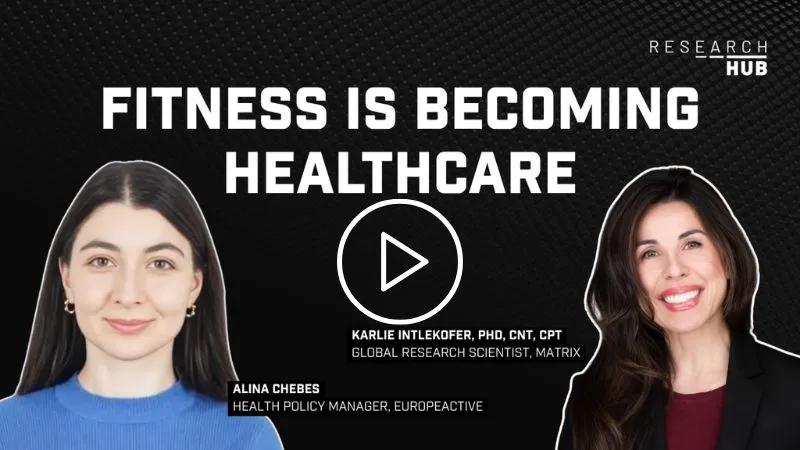
To hear more insights on health policy, physical activity and the future of fitness in Europe, listen to the full conversation between Dr. Karlie Intlekofer and Alina Chebes on the Research Hub Podcast.

